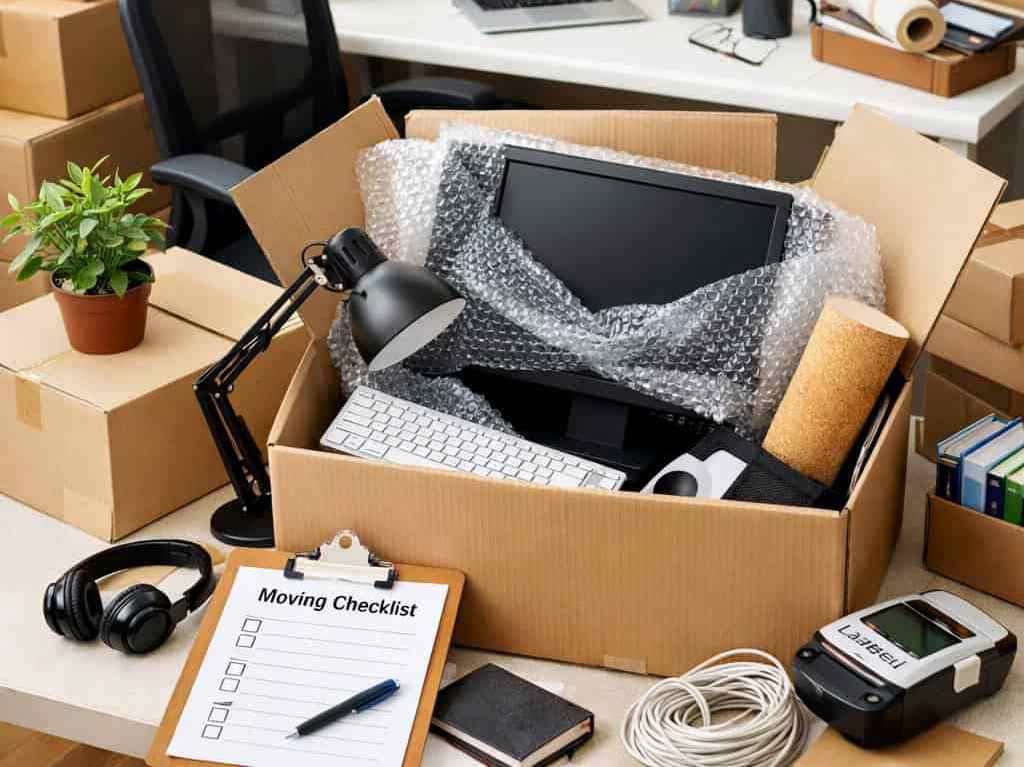
A company relocation changes more than an address. Desks, computers, files, equipment, supplies, and shared workspaces all have to make the transition while the business continues serving customers and managing everyday responsibilities.
That is why a Largo business move deserves a different approach from a household relocation. The objective is not simply to transport everything safely, but to create a sequence that allows the company to get back to work as quickly as practical.
Build the Move Around Business Operations
The first task is to create an inventory. List office furniture, electronics, documents, equipment, supplies, storage units, and anything else that needs to be transferred.
This is also an opportunity to remove unnecessary items. Outdated furniture and unused equipment do not need to consume truck space or occupy valuable room in the new premises.
A floor plan for the destination can make the process even more efficient. If each department has an assigned area, movers can deliver furniture and boxes directly to the correct rooms.
Identify Business-Critical Items
Not every item has the same priority. Computers, servers, essential documents, reception equipment, and frequently used office furniture may need to be available first.
Creating a priority list helps determine the order in which departments and equipment should be moved.
Commercial Moving Requires Careful Furniture Handling
Office furniture can be surprisingly difficult to relocate. Large desks, conference tables, filing cabinets, shelving, reception counters, and workstations may require disassembly before transportation.
Commercial Movers can coordinate the physical handling of these items while reducing the amount of heavy lifting required from employees.
For businesses planning a Largo relocation, the commercial moving services available through https://dunedinmovers.com/commercial-movers/ can be considered when deciding how much of the process should be handled professionally.
Protective materials are particularly useful for furniture that will travel through narrow corridors, elevators, loading areas, or busy entrances.
Give Technology Its Own Checklist
Modern companies cannot afford to treat technology as an afterthought. Computers, monitors, printers, networking equipment, servers, and other electronics are central to daily operations.
Before moving, equipment should be documented and cables or accessories labeled. This makes it easier to reconnect workstations and identify missing components after delivery.
Sensitive technology may require additional protection during transportation. IT staff or an external technology provider should coordinate shutdown and reconnection procedures so the physical relocation does not create unnecessary technical downtime.
Keep Important Documents Organized
Files and business records should be grouped logically rather than packed into anonymous boxes. Labeling by department or destination room makes it easier to find important materials after the move.
Confidential documents should also remain appropriately controlled throughout the relocation.
Choose a Schedule That Fits the Company
A business may not be able to stop operating for an entire day. Depending on the size and structure of the company, moving can take place in stages, during evenings, or over a weekend.
One department can potentially move while another continues working from the existing premises. Essential operations can then transition according to priority.
Employees should receive clear instructions about packing their workstations, removing personal belongings, and reporting to the new location.
Professional Support Can Reduce the Workload
A company relocation involves dozens of physical tasks that can quickly distract employees from their normal responsibilities.
Dunedin Movers https://dunedinmovers.com/ can provide professional moving assistance for businesses that need help with transportation and the physical handling of workplace belongings.
Commercial Movers can be particularly useful when the premises contain heavy furniture, large quantities of equipment, or multiple departments that need to be transferred according to a coordinated schedule.
When Storage Is Useful
The new premises may not have room for every item immediately. Renovations, downsizing, expansion, or a phased office setup can create a temporary need for additional space.
Furniture, archived files, spare equipment, and excess supplies can be placed in storage until the company is ready to use them. This prevents the new office from becoming overcrowded while employees are trying to establish their work areas.
Prepare the New Largo Location
Before the moving truck arrives, make sure the destination is ready to receive the shipment. Access points should be clear, rooms should have assigned purposes, and major furniture locations should already be determined.
This makes unloading much more direct and reduces the amount of rearranging required afterward.
A successful company relocation in Largo is ultimately about continuity. When inventory, furniture, technology, scheduling, storage, and employee communication are planned together, the business can approach its new location with fewer disruptions and a much clearer path back to normal operations.